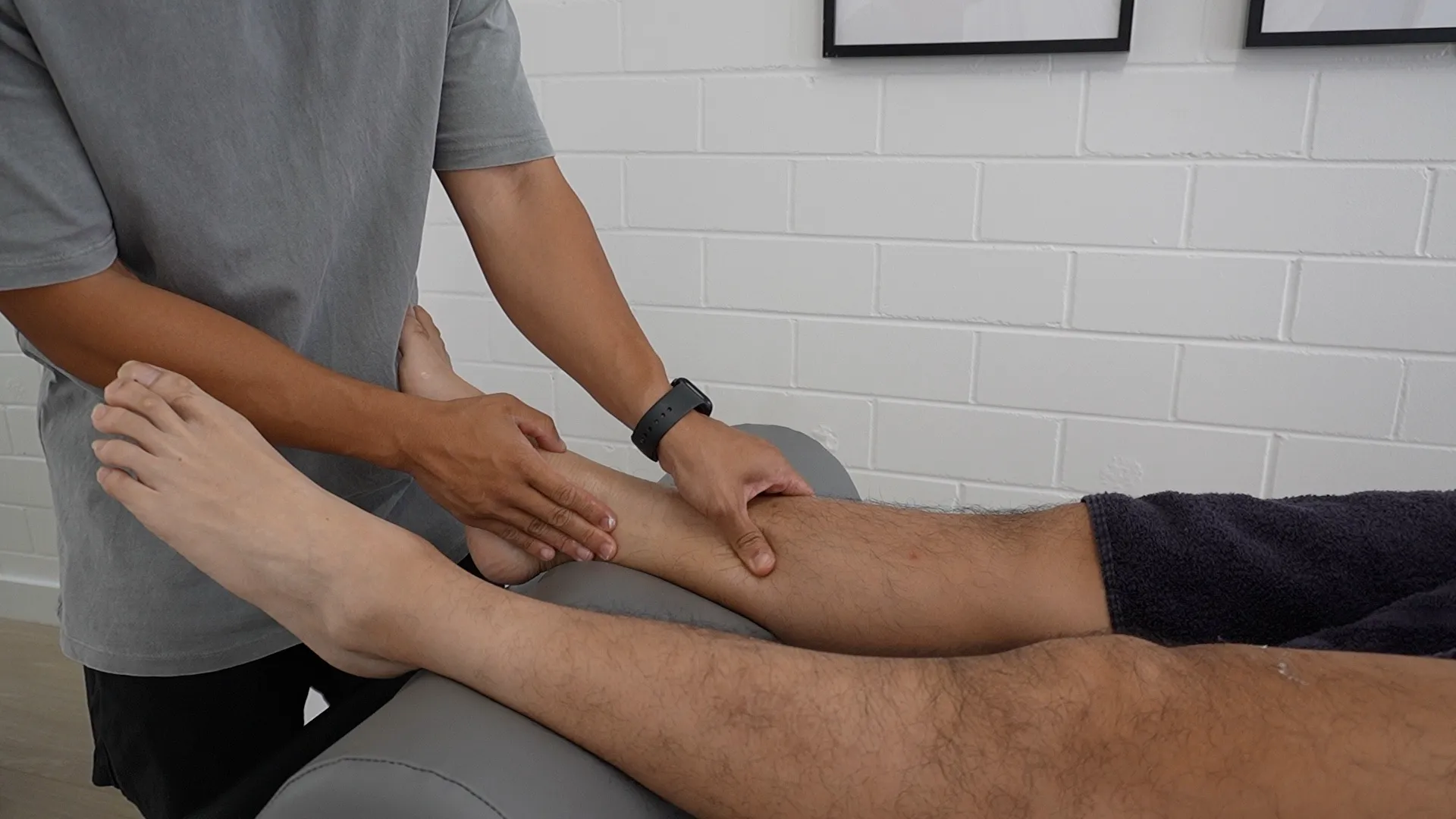
HYROX is one of the best things to happen to gym training in years. It’s achievable for almost anyone, it gives you a clear goal, and race day is a lot of fun. I’ve raced it myself, and I see more and more people preparing for their first one.
I also see the injuries that come from preparing for it. The good news is that most of them are predictable, and many are preventable.
What makes HYROX hard on the body
A HYROX race is 8 × 1 km runs, each followed by a workout station: SkiErg, sled push, sled pull, burpee broad jumps, rowing, farmers carry, sandbag lunges and wall balls.
The challenge isn’t any one station. It’s the combination: running on legs that have just pushed a sled, lunging on legs that have already run 7 km, and throwing wall balls when your shoulders and legs are both tired.
The areas that take the most load are:
- Calves and Achilles. About 8 km of running plus sled pushing and lunges.
- Knees. Lunges, wall balls and burpee broad jumps all load the front of the knee.
- Lower back. Sled pull, farmers carry and rowing, especially when fatigue makes your posture slip.
- Hip flexors and groin. Sled push and lunges, particularly with a long stride.
- Shoulders. Wall balls and SkiErg at high volume.
The most common mistakes
1. Adding running too quickly
Many HYROX athletes come from a gym background and haven’t run much. Running volume is often the first thing to jump, and calves, Achilles and shins are usually the first to complain. Build your weekly running gradually and keep most of it at an easy, conversational pace.
2. Only training the race simulation
Full or half race simulations are useful, but they’re very fatiguing. Doing them every week leaves little room to recover and build strength. One every two to four weeks is plenty for most people.
3. Skipping strength work
Heavy, slow strength work (squats, deadlifts, split squats, calf raises) builds the capacity your tissues need to cope with high-rep race work. It’s your injury insurance.
4. Ignoring early niggles
A small Achilles ache that you ignore for three weeks is a lot harder to fix than one you manage in the first week.
A simple framework for your prep
For a typical 12–16 week block, I suggest:
- 2–3 runs per week. Mostly easy, with one session of intervals or compromised running (running straight after a station) as you get closer to race day.
- 2 strength sessions per week. Lower-body focus, plus pulling and trunk work.
- 1–2 station-specific sessions. Practise technique and pacing on the sled, lunges and wall balls, building volume gradually.
- At least one full rest day, and plenty of sleep.
Build your total training load by small amounts each week, and every third or fourth week, back off a little to let your body catch up.
Strength exercises worth prioritising
- Calf raises: straight-knee and bent-knee, building up to heavy, slow sets. Strong calves protect the Achilles and help your running.
- Split squats and step-ups: they prepare your knees and hips for sandbag lunges.
- Romanian deadlifts: for the hamstrings and lower back, ahead of sled pulls and carries.
- Single-arm carries: they build the trunk and grip strength you need for farmers carry.
- Copenhagen planks: they strengthen the groin, which works hard in the sled push and lunges.
Early warning signs to act on
Get advice early if you notice:
- morning stiffness in your Achilles that’s getting worse week to week
- pain in one spot on your shin that hurts to press on
- knee pain going down stairs or after lunges that lingers into the next day
- any pain that makes you change how you run or move
How I can help
As a physio who has raced HYROX, I can do a pre-race screen to pick up weak links before they become injuries, and if you’re already sore, I’ll help you adjust your training so you still make it to the start line. Read more about HYROX physio or book an initial consult.