What it feels like
- Pain around or behind the kneecap with stairs, squats, lunges or running
- Pain on the outside of the knee on longer or downhill runs
- Pain just below the kneecap with jumping (box jumps, double-unders)
- Swelling, giving way or locking after a twist or awkward landing
Common conditions
- Runner’s knee (patellofemoral pain): pain around the kneecap
- ITB syndrome: pain on the outside of the knee
- Patellar and quadriceps tendon pain: often from jumping and running load
- Ligament injuries: including ACL and MCL sprains
- Meniscus irritation: pain with twisting and deep squatting
For more on running-related knee pain, read Knee pain in runners.
How I treat it
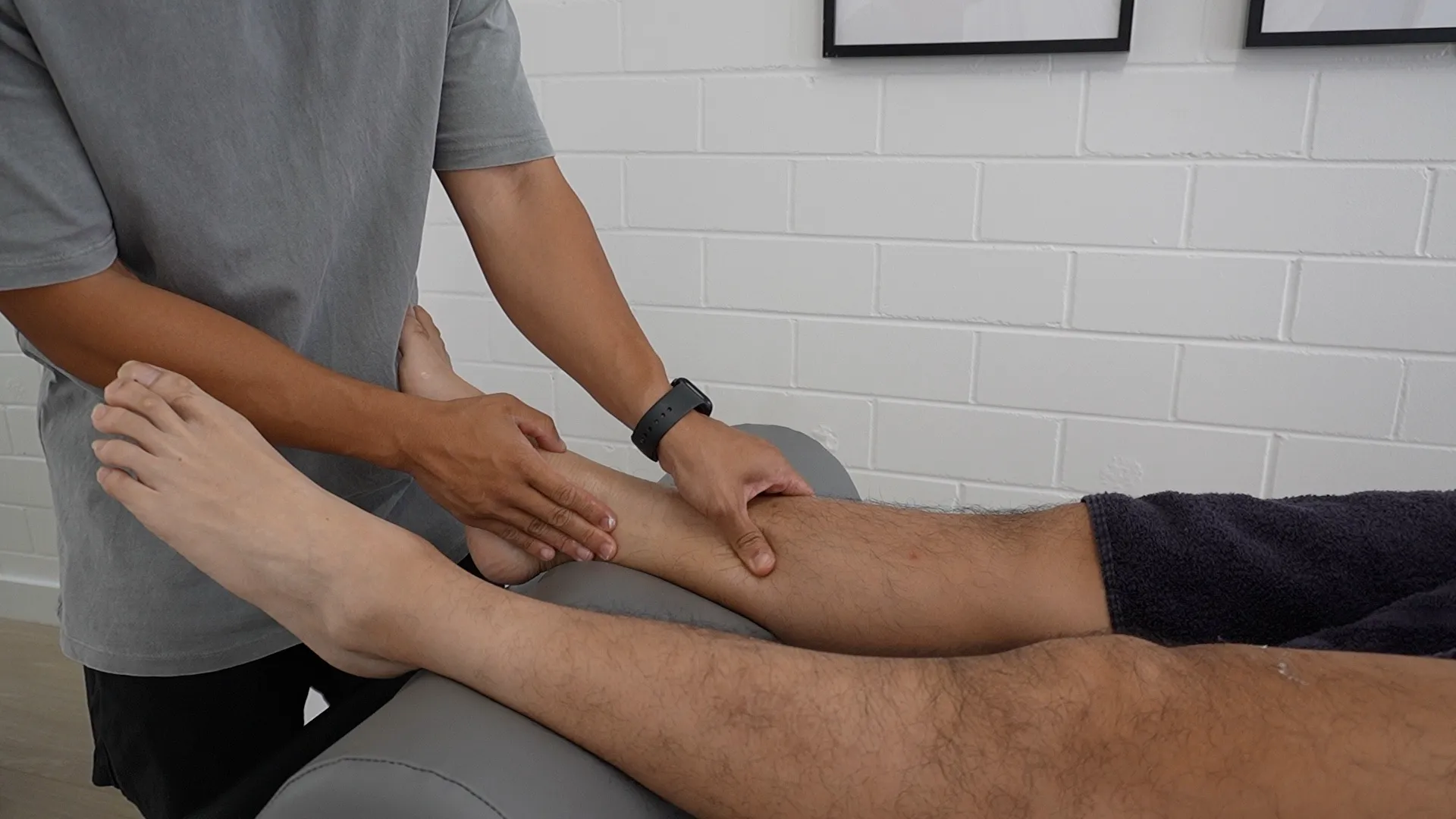
Reset: an assessment of your knee, hips, ankles and how you run, squat and land. Hands-on treatment, dry needling and load changes to settle pain.
Rebuild: progressive strength work for your quads, hips and calves. Tendons and joints respond to the right load, so I build it up steadily.
Revive: a structured return to run, jump and lift, with a plan to manage your training load from here.
When to see a doctor urgently
See a doctor promptly if your knee swelled up quickly after an injury, it locks and won’t straighten, you can’t put weight on it, or it’s hot, red and swollen with a fever.