Signing up for a half marathon is exciting. You pick a race, download a plan and start running. Then, somewhere around week six, your knee starts aching, your Achilles stiffens up, or your shins start to hurt.
I’ve run two half marathons, and I see this pattern often in clinic. Most running injuries aren’t bad luck. They usually come from training load building faster than the body can adapt. Here’s how to give yourself the best chance of getting to the start line healthy.
Start from where you are
Before choosing a plan, be honest about where you’re starting from:
- How many kilometres a week are you running now?
- What’s your longest recent run?
- Have you had any injuries in the last year?
If you’re currently running 10 km a week, a plan that starts at 30 km a week is setting you up for trouble. Ideally, give yourself 12–16 weeks for your build, and more if you’re new to running.
Build gradually
You’ll often hear the “10% rule”: increase your weekly distance by no more than 10% each week. It isn’t a strict scientific rule, but it’s a sensible rough guide. More important is avoiding big jumps, like suddenly doubling your weekly distance or adding a long run that’s much longer than you’re used to.
A few principles that help:
- Change one thing at a time. Don’t increase distance, add hills and start speed work all in the same week.
- Schedule easier weeks. Every third or fourth week, reduce your volume by about 20–30% to let your body catch up.
- Increase your long run gradually. Add one to two kilometres at a time.
Most of your running should be easy
One of the most common mistakes is running every run at the same, moderately hard pace.
As a guide, around 80% of your running should be at an easy, conversational pace, where you could chat in full sentences. Save the harder efforts (intervals, tempo runs) for one or two sessions a week. Easy running builds your fitness base with much less stress on your body.
Strength training: your injury insurance
Runners who do regular strength training tend to get injured less. Two sessions a week of 20–30 minutes is enough. Focus on:
- Calf raises: straight-knee and bent-knee, building to heavy single-leg sets. Your calves absorb a huge amount of force with every step.
- Split squats or step-ups: for your quads, glutes and knees.
- Romanian deadlifts or single-leg deadlifts: for your hamstrings and hips.
- Side planks and hip abduction: for pelvic control.
Lift weights that feel challenging for 6–12 reps. Light, high-rep “toning” work doesn’t build the same strength.
Recovery counts as training
Your body adapts in the time between runs, not during them. Prioritise:
- Sleep: aim for 7–9 hours, especially during heavier weeks
- Fuel: eat enough to support your training, including carbohydrate around longer runs
- Rest days: at least one full day off each week
Listen to the early warning signs
Niggles are common, but some need action. Change your training and consider getting assessed if you notice:
- pain that changes the way you run
- pain that’s worse the morning after a run, or getting worse each week
- pain in one specific spot on a bone
- swelling, or pain at rest or at night
Catching problems early usually means a small adjustment to your training rather than weeks off.
How I can help
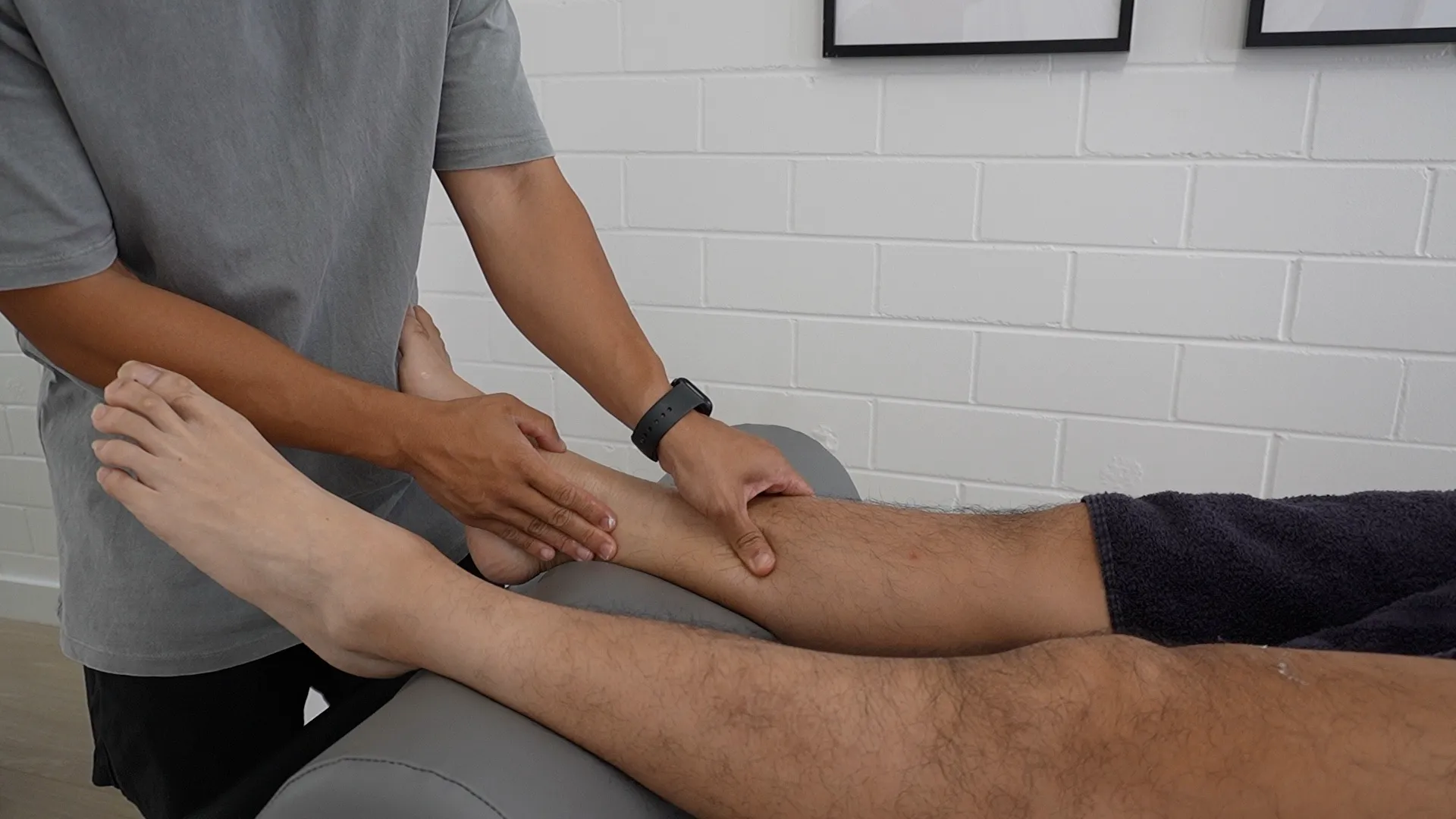
Whether you want a running assessment before your build or you’ve hit a niggle along the way, I’ll look at your training load, strength and running mechanics, then help you build a plan that gets you to race day. Read more about running physio, or see my article on knee pain in runners.