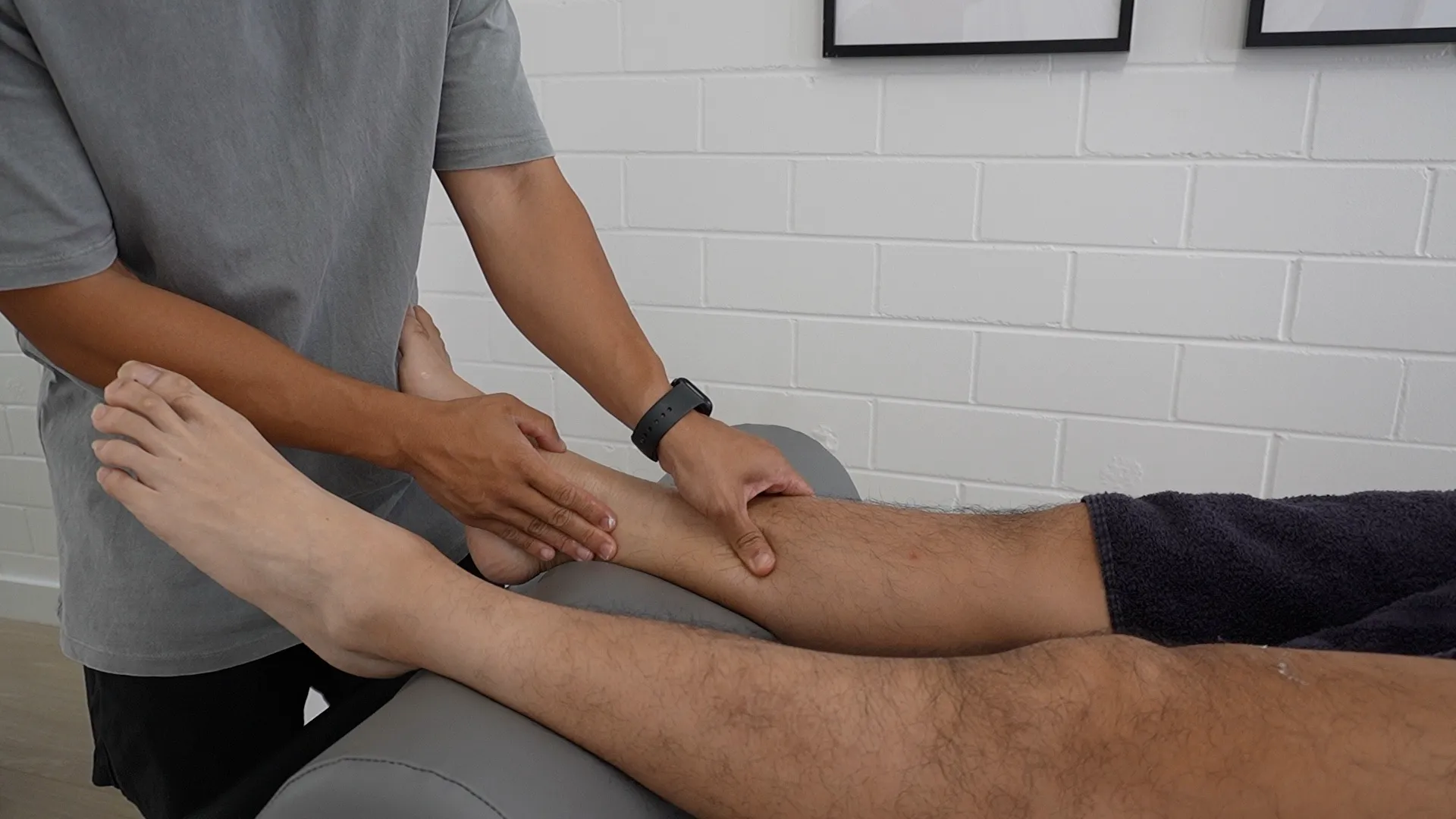
If I had to pick the one area that causes HYROX athletes the most trouble, it would be the calves and Achilles.
It makes sense when you look at the race. You run eight kilometres, push a heavy sled on your toes, lunge 100 metres and do burpee broad jumps, all of which load the calf and Achilles heavily, and often while they’re already fatigued.
Two common problems
Achilles tendon pain
Achilles pain (often called Achilles tendinopathy) usually comes on gradually. Typical signs are:
- stiffness and pain in the Achilles first thing in the morning, which eases as you get moving
- pain at the start of a run that may ease once you warm up, then returns afterwards
- tenderness when you squeeze the tendon
It’s a load problem: the tendon has been asked to do more than it’s ready for, usually after a jump in running or jumping volume.
Calf strains
A calf strain is usually more sudden: a sharp pain or a “grab” in the calf, often during a run, sled push or jump. It can range from mild tightness to difficulty walking.
If you felt a sudden pop or snap at the back of your ankle, as if someone kicked you, and now struggle to rise onto your toes, get it checked straight away. That can be a sign of an Achilles rupture.
Why HYROX athletes are prone to it
- Running volume increases quickly during race prep, especially for people coming from a gym background.
- Sled pushes load the calves heavily with the ankle bent.
- Compromised running (running straight after a station) means the calves are already tired before the run starts.
- Footwear changes, like switching to lower or more flexible race shoes, can add load to the calf and Achilles.
What to do if your Achilles starts to hurt
Rest is rarely the answer for a tendon. Tendons respond to the right amount of load, and complete rest can leave them weaker. Instead:
- Reduce, don’t stop. Cut your running volume and intensity back to a level where pain stays low (around 3 out of 10 or less) and the tendon isn’t stiffer the next morning.
- Use the morning test. Morning stiffness is a great guide. If it’s worse the next day, the previous day’s load was too much.
- Pause the aggravating stuff. Sprints, hill running, burpee broad jumps and box jumps are usually the hardest on the tendon. Take them out for a while.
- Swap in low-impact fitness. Biking, rowing and the SkiErg keep your engine going.
- Start strengthening. This is the most important part of recovery.
GoOK to keep training
Ease offScale back the load
StopRest it and get it checked
Calf strength: your most important prep
Strong calves protect the Achilles and help your running economy. Most HYROX athletes I assess are weaker here than they think.
1. Straight-knee calf raises
Stand on a step with your heels hanging off. Rise up onto your toes over two seconds and lower over three. Start on two legs and progress to one leg, then add weight.
- 3–4 sets of 8–15
2. Bent-knee calf raises
The same movement with your knees bent, to target the deeper calf muscle (the soleus), which works hard when running and pushing sleds. A seated version with a weight on your knees works well.
- 3–4 sets of 10–15
3. Calf raise holds (when sore)
If calf raises hurt, start with holds. Rise up onto your toes and hold the top position.
- 5 holds of 30–45 seconds
Over time, build up to heavy single-leg calf raises. A common goal is 25 or more good single-leg calf raises on each side.
When to get help
Book an assessment if:
- your Achilles or calf pain isn’t improving after a couple of weeks of changes
- the pain is getting worse or affecting how you walk
- you’re within a few weeks of race day and unsure whether to race
How I can help
I’ll assess your tendon and calf strength, help you adjust your training so you keep your fitness, and put together a calf and Achilles program that builds you up for race day. Read more about ankle and foot pain and HYROX physio.