By the time you reach the sandbag lunges in a HYROX race, you’ve already run 7 km and done six stations. Then you lunge 100 metres with a sandbag on your back, run another kilometre, and finish with 75–100 wall balls.
It’s no surprise that the knees often complain, especially during training blocks where these stations are practised a lot.
The most common type of knee pain
The pain I see most in HYROX athletes is pain around or behind the kneecap (medically called patellofemoral pain). A close second is pain just below the kneecap, where the kneecap tendon attaches.
Typical signs include:
- pain at the front of the knee during or after lunges, squats and wall balls
- pain going down stairs
- aching after sitting for a long time with your knees bent
- a feeling of stiffness when you first get up
Both are usually load-related: the knee is being asked to handle more than it’s currently ready for. They’re not usually a sign of damage, and most people improve well with the right changes to their training.
Why lunges and wall balls are hard on the knees
Both movements load the knee deeply bent, and both are done for high reps under fatigue. As you tire:
- your hips and glutes contribute less, so the quads and kneecap take more of the load
- your knee may start to drift inwards
- your stride or squat depth can change in ways that add load to the front of the knee
Add a sudden jump in lunge or wall-ball volume during race prep, and the knee can become irritated.
How to modify your training
The aim is to keep training while lowering the load on the knee to a level it tolerates. As a guide, pain during exercise up to about 3 out of 10 is generally okay, as long as it settles by the next morning.
GoOK to keep training
Ease offScale back the load
StopRest it and get it checked
- Lunges: reduce the distance, take a slightly longer stride (this shifts load to the hips), or swap to reverse lunges, which are usually more comfortable than walking lunges.
- Wall balls: reduce the reps, use a lighter ball, or squat to a box set at a depth that’s comfortable.
- Running: usually fine to continue. Flat ground tends to be easier than hills or stairs.
- Sleds: often fine, but reduce the weight if the push aggravates the knee.
Strength work that helps
Strengthening the muscles around the knee and hip is one of the most effective treatments for front-of-knee pain.
1. Spanish squats or wall sits
Hold a squat at a comfortable depth, either against a wall or with a band behind your knees. These load the quads and tendon steadily, and are often well tolerated even when the knee is sore.
- 4–5 holds of 30–45 seconds
2. Split squats
Start with bodyweight, at a depth that’s comfortable, and progress to holding dumbbells.
- 3 sets of 8–12 each side
3. Hip thrusts or glute bridges
Strong glutes help control the knee and take load off the front of it.
- 3 sets of 10–15
4. Side-lying hip abduction or banded side steps
These target the side of the hip, which helps stop the knee drifting inwards.
- 3 sets of 15 each side
Build up gradually over several weeks, increasing the load as it becomes easier.
When to get it assessed
Book an assessment if:
- your knee pain has lasted more than two to three weeks despite changes
- it’s affecting your running or daily life
- your knee is swollen, locks, catches or gives way
- the pain started with a twist, fall or impact (get this checked sooner)
How I can help
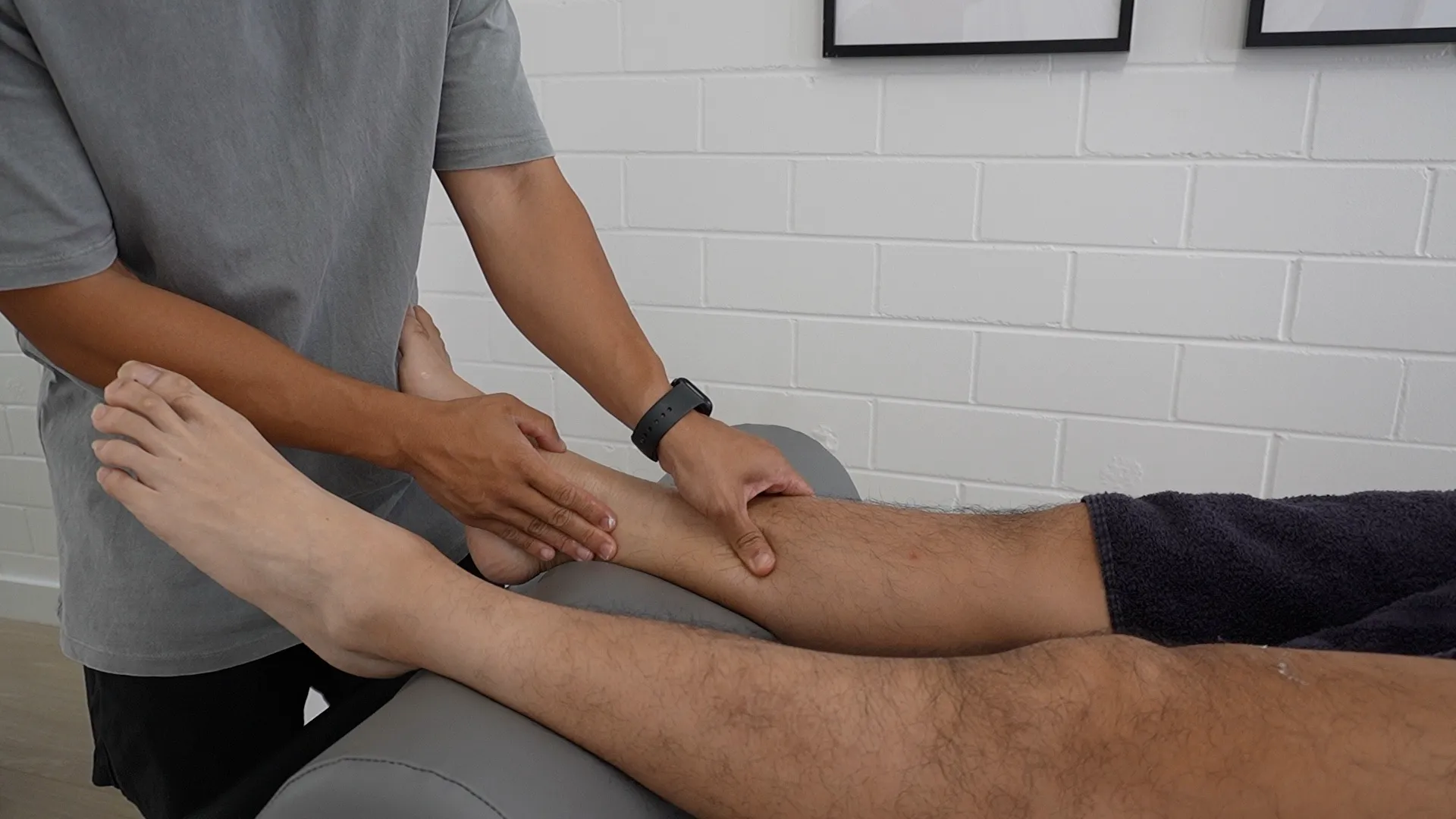
I’ll check the knee and how it moves through your lunges, squats and running, then build a plan that settles the pain and keeps you on track for race day. Read more about knee pain and HYROX physio.