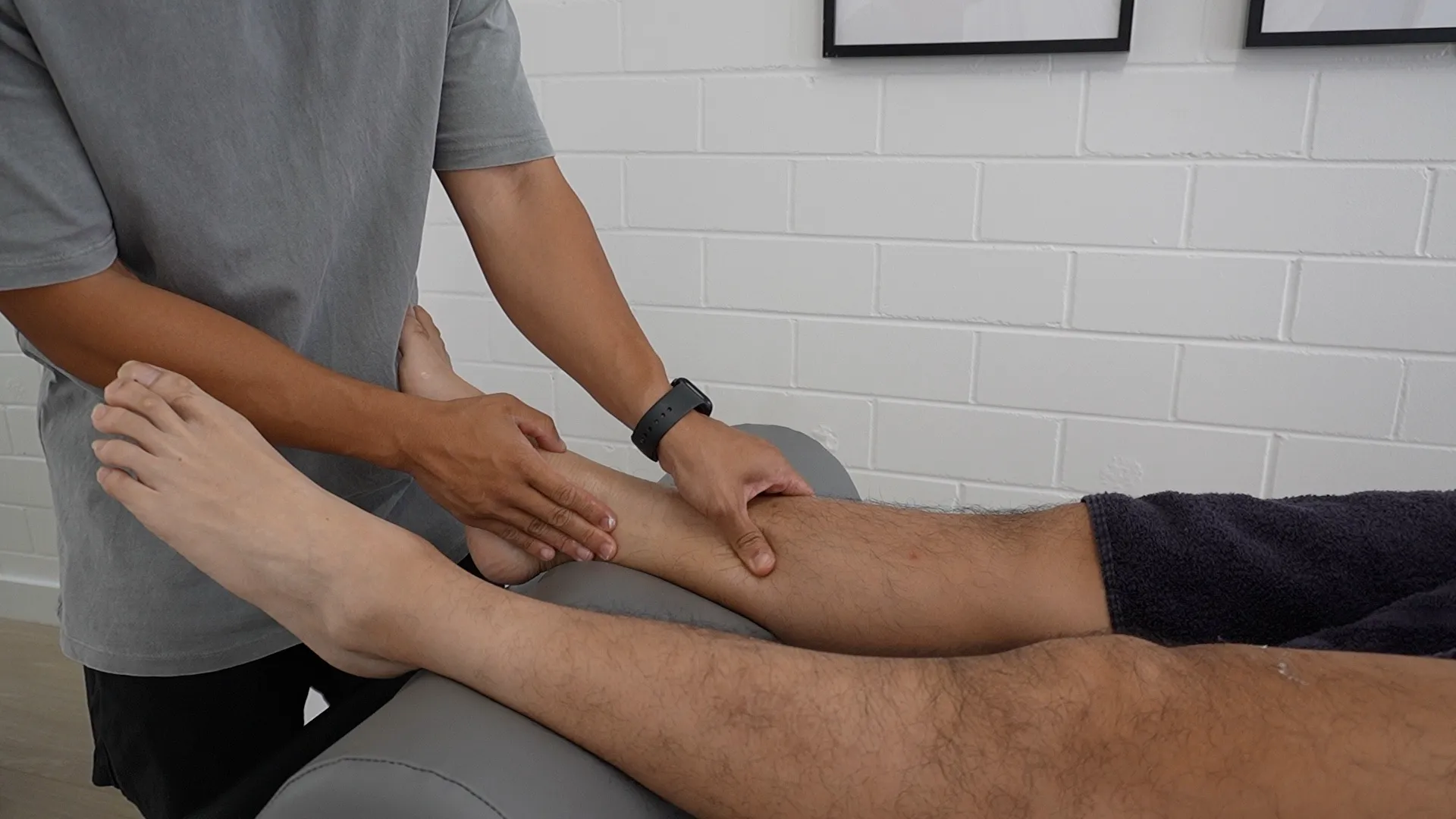
Shin pain is one of the most common running complaints, especially for people who are new to running, coming back after a break, or building up for a race.
Most of the time it’s what people call “shin splints”. But sometimes shin pain is a sign of a bone stress injury, which needs to be managed very differently. Knowing the difference matters.
What are shin splints?
“Shin splints” is the everyday name for pain along the inside edge of the shin bone, typically in the lower half. The medical name is medial tibial stress syndrome.
Common signs include:
- pain along a longer stretch of the inner shin (usually more than 5 cm)
- pain at the start of a run that may ease as you warm up
- tenderness along the edge of the bone
- pain that’s often worse the morning after a run
It happens when the bone and surrounding tissues are loaded faster than they can adapt, which is why it often appears after a sudden increase in running.
When it could be a bone stress injury
A bone stress injury (including a stress fracture) happens when repeated loading outpaces the bone’s ability to repair itself. It needs a period of reduced loading to heal properly, so it’s important not to run through it.
Signs that suggest a bone stress injury rather than shin splints:
- pain in a small, specific spot that you can point to with one finger
- pain that gets worse as you keep running, rather than easing
- pain when walking, hopping, or at rest
- pain at night
- swelling over the painful spot
If this sounds like you, stop running and get assessed. You may need imaging to confirm it.
Bone stress injuries are more common in runners who have increased their training quickly, who aren’t eating enough for the training they’re doing, or who have had changes in their menstrual cycle. If any of these apply, it’s worth discussing with a health professional.
Why shin pain happens
The most common causes are:
- Doing too much, too soon. A sudden jump in weekly distance, speed work or hills.
- Changes in surface or footwear. Moving from grass to concrete, or switching shoes.
- Low calf and hip strength. Strong calves absorb a lot of the force that would otherwise go through the shin.
- Overstriding. Landing with your foot well in front of your body increases impact.
- Not enough recovery. Too little sleep or fuel.
What to do if your shins hurt
If it sounds like shin splints (diffuse pain, no single sore spot):
- Reduce your running to a level that keeps pain low (around 3 out of 10 or less) and doesn’t leave you sorer the next morning. This might mean shorter runs, fewer runs per week, or a run-walk approach.
- Run on softer surfaces where possible, like grass or trails.
- Keep your fitness with low-impact cardio such as cycling, rowing or swimming.
- Strengthen your calves with calf raises, building up to single-leg and weighted versions.
- Consider your cadence. Taking slightly shorter, quicker steps (about 5–10% more steps per minute) can reduce load on the shin.
GoOK to keep training
Ease offScale back the load
StopRest it and get it checked
Returning to running
Build back gradually. A simple approach:
- start with shorter, easy runs on flat, softer ground
- increase one thing at a time (distance, then frequency, then speed)
- keep at least one rest day between runs early on
- monitor pain the next morning as your guide
When to see a physio
Book an assessment if:
- your pain is in one specific spot on the bone
- pain is present at rest, at night or when walking
- it hasn’t improved after two weeks of reducing your running
- shin pain keeps coming back each time you build up
I’ll work out whether it’s shin splints or something more, and build a return-to-run plan that fits your goals. Read more about running physio.